


What do fish sandwiches and artificial intelligence have in common?

From the "fish sandwich trade fair" to the industry platform of the future – and why ITVT will be there in 2026

There is a good reason why thousands of companies, engineers and decision-makers from all over the world meet in Hanover every year: the Hannover Messe is considered the most important industrial trade fair in the world.  


Its story begins in 1947, just two years after the end of World War II. Under the name “Export Fair Hannover”, it was intended to help reintegrate the German economy into international trade flows. The first trade fair took place from 18 August to 7 September 1947 – and brought visitors from 53 countries to Hanover. 


The event even had a curious feature at the time: 

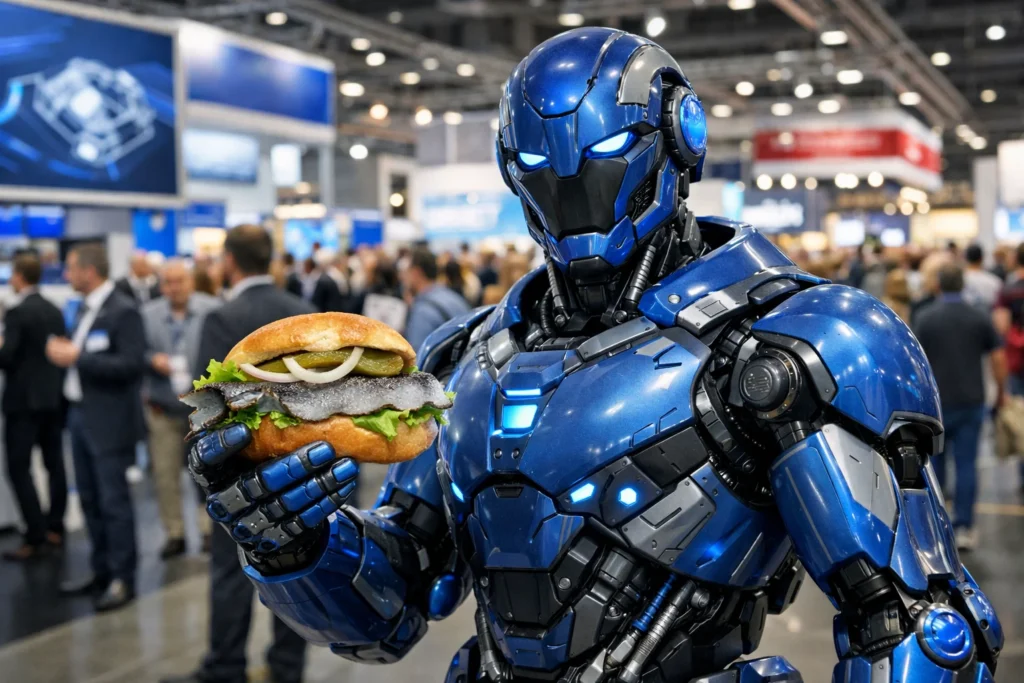
With each ticket, visitors received a fish sandwich and a glass of trade fair wine. Therefore, the event quickly earned the nickname “Fish Roll Fair”. 

But this improvised post-war mass developed into an impressive success story. Today, the Hannover Messe is a global platform for industrial innovations – from mechanical engineering and automation to digitalization and artificial intelligence.

A stage for technological milestones

For decades, the Hannover Messe has repeatedly been the scene of significant technological developments. It became clear early on which innovations would shape the industrial world in the coming years. An early example of this is the year 1959, when digital computers for industrial applications were presented for the first time at the trade fair . What sounded like a dream of the future at the time was the beginning of a development that was to fundamentally change industrial production. Computers gradually became a central component of modern production facilities and laid the foundation for the digitization of industry. 


More than fifty years later, another term was coined at the Hannover Messe that is now known worldwide: Industry 4.0. The concept was first presented in 2011 and describes the comprehensive networking of machines, products and production systems. Production plants communicate with each other, data is analyzed in real time and processes can be flexibly controlled. This makes the factory smarter, more efficient and much more adaptable to new market requirements. 

Unglaublich, aber wahr: Was harmlos mit einem Fischbrötchen begann, ebnete den Weg für KI im Maschinen- und Anlagenbau.


Today, another technological topic is the focus of the Hannover Messe: artificial intelligence in industry. AI systems help companies evaluate large amounts of dataautomate business processes, and make informed decisionsWhether in production planningsales or serviceartificial intelligence is increasingly becoming a decisive competitive factor for industrial companies.

Industry meets politics – social significance of the Hannover Messe

However, the Hannover Messe is not only a stage for technological innovations, but also an important meeting place for international economic policy. For decades, the show has been regularly opened by high-profile political figures, highlighting its importance to the global industry. Among the most prominent guests were German chancellors such as Angela Merkel and Olaf Scholz, who repeatedly emphasised the role of innovation, industrial policy and international cooperation in their opening speeches. 

A particularly big media highlight was the visit of the then US President Barack Obama in 2016. The USA was the partner country of the Hannover Messe at the time, and Obama opened the event together with Angela Merkel. His arrival with the legendary Air Force One made headlines worldwide and made it clear what international appeal the trade fair has. Such political appearances show that the Hannover Messe is much more than a trade fair – it is a platform where economic, technological and social developments come together.

2001 – a special year for industry and for IT Vision Technology

The year 2001  also marks an important moment in the history of the Hannover Messe. At the time, the event was strongly influenced by the increasing digitization of industrial processes. Topics such as automationindustrial software and the so-called “digital factory” came into focus. For the first time, production processes could be comprehensively planned, simulated and optimized digitally – an important step towards today’s concepts of networked and data-driven industry.

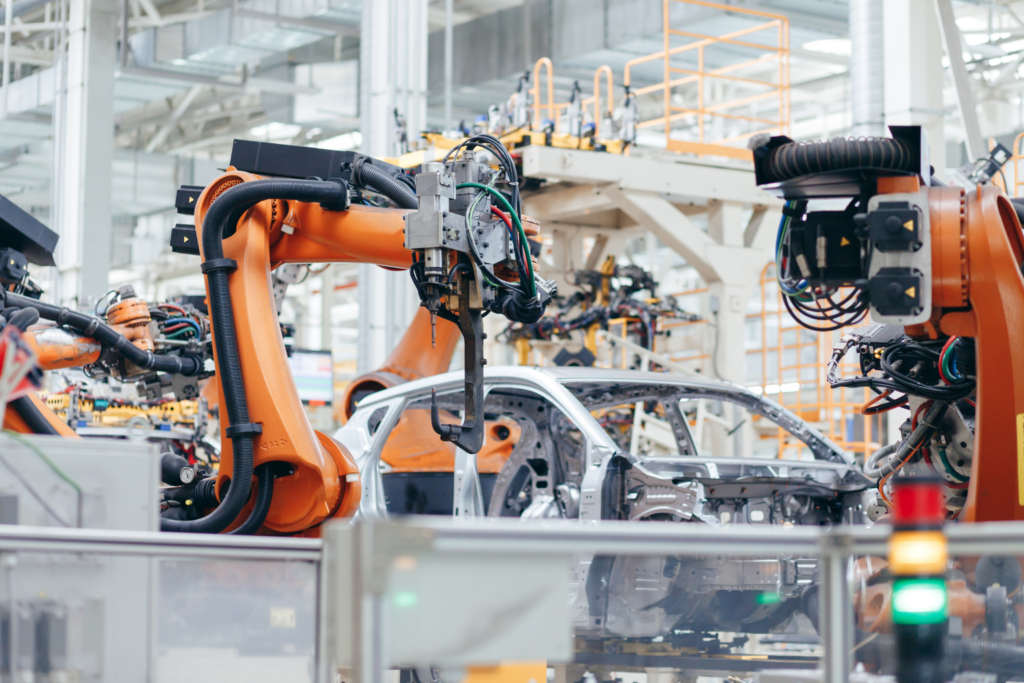
Zuerst gesehen auf der Hannover Messe: Robotik hat viele Fertigungsprozesse revolutioniert.


ITVT was also founded in the same year. For more than two decades, the company has been supporting organizations in digitizing their business processes and making them efficient. The focus is on solutions for CRM systems, ERP systems and artificial intelligence, based on Microsoft technology. These technologies play a central role, especially in mechanical and plant engineering, as complex projects, sales processes and services increasingly have to be digitally interlinked.


The topics discussed at the Hannover Messe 2001 thus form the starting point for many developments that companies are dealing with today. The fact that ITVT is now celebrating its anniversary in 2026, while Hannover Messe continues to be a central platform for industrial innovation, shows how closely the development of the digital industry is linked to solutions for modern business processes.

ITVT at the Hannover Messe

At Hannover Messe 2026, ITVT displayed solutions specifically for companies in manufacturing and mechanical and plant engineering, with the focus on two central topics:


QuickStart solutions for CRM and ERP 

With the new QuickStart product line, ITVT offers entry-level solutions for companies that want to implement CRM and ERP systems quickly and efficiently. The solutions are specially tailored to typical processes in mechanical and plant engineering and enable rapid implementation with clearly defined best-practice processes.


AI agents for business processes 

In addition, ITVT presented its own AI agents that intelligently support business processes within CRM and ERP systems. For example, they can analyze sales data, improve service processes or automatically evaluate ERP data. The aim is to help companies make their processes more efficient and at the same time tap into new potential through artificial intelligence.


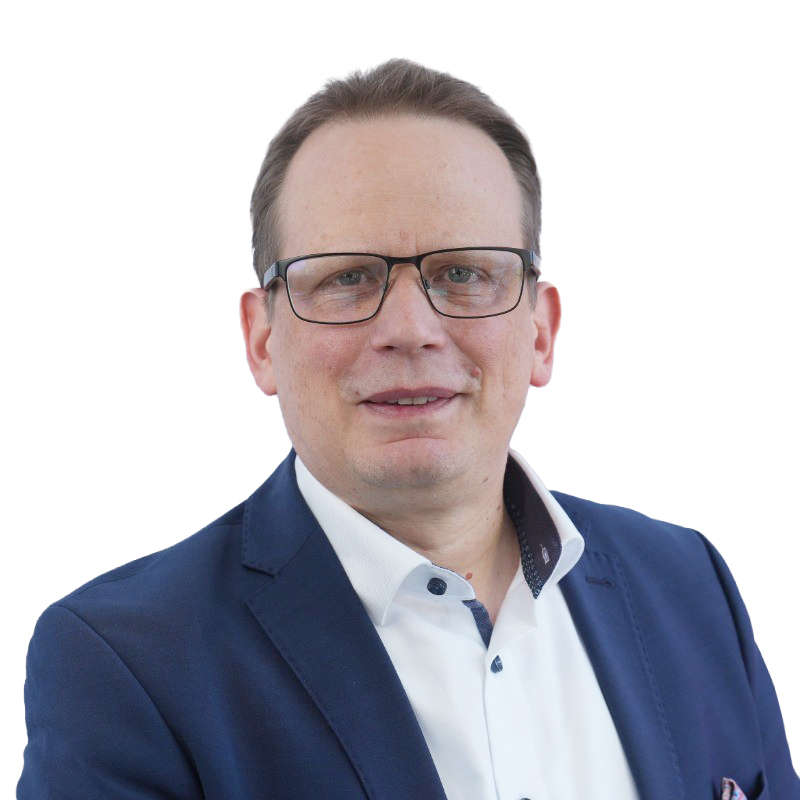
Die Gründer von ITVT: Jochen Klipfel und Patrick Kreuzer sind auch heute noch Eigentümer und CEOs des mittlerweile globalen Lösungsspezialisten aus dem „Ländle“.

More insights like this, and events that go deeper into these topics in our newsletter! 

Privacy Overview
ITVT Group

This website uses cookies so that we can provide you with the best user experience possible. Cookie information is stored in your browser and performs functions such as recognising you when you return to our website and helping our team to understand which sections of the website you find most interesting and useful.

Strictly Necessary Cookies

Strictly Necessary Cookie should be enabled at all times so that we can save your preferences for cookie settings.